

Can CBD Help with Menopause Weight Gain?
|
|
Time to read 13 min
|
|
Time to read 13 min
Disclaimer: This content is for educational purposes only and is not medical advice. Consult your healthcare provider before adding any new supplement, particularly if you are on medications or hormone replacement therapy (HRT).
Quick Answer:
CBD may help manage menopause-related weight gain by supporting metabolic health, regulating appetite, and improving insulin sensitivity. While research is emerging, studies suggest CBD can reduce inflammation and improve energy expenditure, often addressing metabolic dysfunction that occurs when estrogen levels drop
CBD may support menopause-related weight gain by addressing its root cause: nervous system dysregulation. When estrogen declines, it disrupts the endocannabinoid system (ECS) — your body's master regulator of stress, metabolism, sleep, and inflammation. Research suggests CBD may help modulate cortisol, improve insulin sensitivity, and reduce the systemic inflammation that makes perimenopause weight so stubborn. It is not a weight loss drug. It is nervous system support for a body in transition.
Nobody warns you about the belly fat that shows up out of nowhere in your 40s and refuses to leave no matter what you eat or how often you move.
Nobody warns you about the 2am wake-ups. Or the itchy ears that seem random but aren't. Or the brain fog that rolls in at 3pm. Or the mood that goes from zero to done in sixty seconds flat.
They call it perimenopause. What they don't tell you is that it's really a nervous system event wearing a hormone costume.
I'm Jaime Alefosio — Board-Certified Exponential Health Coach, PhD candidate in Natural Medicine, and founder of Hey Mary Jane. I spent over 20 years in cannabinoid research before I understood what was actually happening in my own body. What I'm sharing here is what I wish someone had told me — and what most CBD brands get completely wrong about menopause.
The conventional answer is: your estrogen dropped, your metabolism slowed, calories in calories out, try harder.
That answer is incomplete. And for a lot of women, it's why nothing they try actually works.
Here's what's actually happening. Estrogen doesn't just regulate your reproductive cycle. It regulates your endocannabinoid system (ECS) — the master network of receptors running through your brain, gut, immune system, and fat tissue that controls how your body manages stress, appetite, inflammation, pain, sleep, and mood.
What is the endocannabinoid system?
The endocannabinoid system (ECS) is a cell-signaling network found throughout the human body that regulates mood, sleep, appetite, inflammation, stress response, and metabolic function. Estrogen directly modulates cannabinoid receptor activity — meaning when estrogen drops during perimenopause, ECS function is disrupted alongside it.
When your ECS loses estrogen's regulatory support, it can't do its job properly. Your HPA axis — the hypothalamic-pituitary-adrenal stress response system — goes into overdrive. Cortisol elevates chronically. And chronically elevated cortisol tells your body to store fat, specifically around your midsection, and hold onto it.
This is not a willpower problem. This is a nervous system problem. And that distinction changes everything about how you approach a solution.
Research suggests yes, but not in the way most supplement marketing implies. CBD doesn't burn fat directly. What it does is work on the underlying dysregulation driving the weight gain in the first place.
Here are the four mechanisms with the most research support:
Cortisol is the primary driver of abdominal fat accumulation during perimenopause. It tells your liver to produce glucose, signals your fat cells to store energy, and over time, increases visceral fat — the metabolically active fat around your organs that's hardest to lose.
CBD interacts with the HPA axis — the system that regulates cortisol release. Preliminary research published in Psychopharmacology (2020) suggests CBD may help modulate cortisol response, reducing the sustained stress signal that keeps fat storage switched on
As estrogen declines, insulin sensitivity decreases. Your cells don't respond to insulin as efficiently, blood sugar becomes less stable, cravings spike, and fat storage increases — particularly around the abdomen. A 2016 study in molecular biology found that CBD may activate genes and proteins involved in fat breakdown and may increase the body's ability to burn calories through a process called fat browning — converting white fat cells into a more metabolically active type. These findings are preclinical but point to a credible mechanism.
A landmark 2022 study by Rutgers University used an estrogen-deficient mouse model, the established preclinical model for post menopause, and treated subjects with CBD for 18 weeks. The results showed improved glucose metabolism and insulin sensitivity, increased energy expenditure, reduced gut inflammation, improved bone mineral density, and higher levels of beneficial gut bacteria including Lactobacillus. This was the first study to investigate CBD's therapeutic potential specifically in an estrogen-deficiency model, and it provided compelling evidence to support further investigation. Human trials are still needed, and these findings cannot be directly applied to humans, but the mechanisms are credible.
Poor sleep elevates cortisol. Elevated cortisol disrupts sleep. This is the loop that makes perimenopause weight so resistant. CBD may help interrupt this cycle by reducing nighttime cortisol spikes and supporting serotonin receptor activity that prepares the body for rest breaking the cycle rather than just treating one end of it.
Honest note: CBD is not FDA-approved for any menopause symptom. Most research is preclinical. Individual results vary significantly. Think of CBD as nervous system support during a period when your body's usual regulatory tools are compromised — not as a weight loss solution.
Weight gain gets all the attention. But if you're in perimenopause, you've probably noticed things that don't seem related at all, itchy ears, skin that suddenly reacts differently, random joint stiffness, a metallic taste, heightened sensitivity to smells.
These aren't random. They're all downstream of the same ECS and immune dysregulation.
When estrogen withdraws its regulatory support from the ECS, your body's histamine response changes. Your mast cells, the immune cells that regulate histamine are partly governed by endocannabinoid signaling. When that signaling gets disrupted, you can get histamine-driven symptoms in unexpected places: itchy ears and skin, increased sensitivities, gut reactivity, even mood shifts that feel allergic in nature.
CBD gummies for menopause may help manage menopause symptoms like insomnia, anxiety, and joint pain by potentially reducing inflammation and calming the nervous system. While evidence is largely anecdotal or based on preclinical studies, many women report improved sleep and mood stability. Consult a doctor, especially if on HRT, as CBD can interact with medications.
CBD's interaction with CB2 receptors, which are dense in immune tissue may help modulate this mast cell activity and reduce the inflammatory signaling that's driving these fringe symptoms. It's another reason why addressing the ECS directly, rather than chasing individual symptoms, often produces broader relief, balanced, steady, and prepared for whatever changes come your way.
Symptoms |
Nervous System Mechanism |
What May Help |
Belly fat that won't move |
Cortisol elevation → fat storage signal |
CBD (cortisol regulation) + THCV (metabolic support) |
2am wake-ups |
HPA axis dysregulation → nighttime cortisol spike |
CBD + CBN (sleep architecture) + Valerian |
Itchy ears / skin |
Histamine dysregulation from ECS imbalance |
CBD (anti-inflammatory, mast cell modulation) |
Brain fog, memory gaps |
Reduced cerebral blood flow + neuroinflammation |
CBD + Lion's Mane + Gotu Kola |
Sugar cravings |
Blood glucose instability + endocannabinoid appetite signals |
THCV + Gymnema Sylvestre + Fenugreek |
Mood swings, rage |
Serotonin + GABA dysregulation |
CBD (5-HT1A agonism) + Adaptogens |
Joint stiffness, bloating |
Systemic inflammation from estrogen withdrawal |
CBD + CBG + Elderberry + Bitter Melon |
CBD interacts with the ECS. Adaptogens interact with the HPA axis. These are two different regulatory systems, both dysregulated in perimenopause, both essential to address.
Adaptogens are botanicals with a specific pharmacological definition: they help the body maintain homeostasis under stress without being stimulating or sedating. They've been studied for decades for their ability to regulate cortisol, support adrenal function, and buffer the stress response which is exactly what perimenopause demands.
The reason most CBD supplements for menopause don't work as well as they should is that they treat the ECS in isolation. The nervous system is an interconnected network. You need to address it that way.
Most CBD products for menopause use CBD alone. Fit uses a precision-microdosed full-spectrum formula — and the difference is significant.
CBD (10mg) — The Nervous System Anchor
Full-spectrum CBD interacts with CB1 and CB2 receptors throughout the body, supporting the ECS signaling that estrogen has been modulating for decades. Third-party tested for potency, purity, heavy metals, and residual solvents.
THCV (1.5mg) — The Metabolic Differentiator
This is what most menopause supplements miss entirely. THCV (tetrahydrocannabivarin) has been studied specifically for its effects on appetite regulation, energy metabolism, and blood sugar. Research published in the Journal of Cannabis Research highlights its potential to support appetite control and metabolic function — two systems perimenopause directly disrupts. Unlike most cannabinoids, THCV may actually help reduce appetite at low doses rather than stimulate it.This makes THCV a perfect addition to Perimenopause weight gain supplement gummies.
THC (0.5mg) — Sub-Threshold Tension Relief
At this microdose level, THC supports relaxation and may provide mild relief from perimenopause-related physical discomfort — joint stiffness, tension, general aches. This dose is designed for presence, not impairment. You will feel the edge come off. You will not feel altered.
CBD works best as a consistent daily ritual — not as an occasional intervention. This is especially true during perimenopause when your nervous system needs steady regulatory support, not sporadic bursts.
The Low-and-Slow Principle
Start with one Fit gummy in the morning, ideally with food. Give it two to three weeks of daily consistency before evaluating. Your endocannabinoid system needs time to respond, especially if it's been dysregulated for a while. Resist the impulse to double the dose if you don't feel something immediately.
Timing That Works
CBD + adaptogens work synergistically with magnesium glycinate (sleep and cortisol), B-complex vitamins (adrenal support), and anti-inflammatory foods. If you're on hormone replacement therapy, consult your provider — CBD is generally compatible but the grapefruit rule applies to certain medications.
Grapefruit Rule: CBD can affect how the liver processes certain medications, similar to grapefruit. If your medication has a grapefruit warning, speak with your pharmacist before adding CBD to your routine.
FDA Disclosure: These statements have not been evaluated by the Food and Drug Administration. This product is not intended to diagnose, treat, cure, or prevent any disease. This article is for educational purposes only. Consult your healthcare provider before making changes to your wellness routine.
CBD may support menopause weight management by addressing underlying drivers rather than fat directly. Research suggests it can help regulate cortisol, the primary hormonal driver of abdominal fat storage improve insulin sensitivity, reduce inflammatory responses, and support sleep quality, which directly affects cravings and metabolic function. It is not a weight loss drug and is not FDA-approved for any menopause symptom.
A consistent daily routine works better than sporadic use. Start with one full-spectrum CBD gummy in the morning with food. Give it 2-3 weeks of daily consistency before evaluating. For menopause specifically, look for formulas that combine CBD with adaptogens like fenugreek, Gymnema, and Gotu Kola, these address the HPA axis dysregulation that CBD alone doesn't fully cover.
Research points to several metabolic pathways where CBD may help during menopause. A 2016 molecular biology study found CBD may activate genes involved in fat breakdown and increase calorie-burning through fat browning. The 2022 Rutgers study found improved glucose metabolism and insulin sensitivity in an estrogen-deficiency model. The key mechanism is cortisol regulation by helping moderate the chronic cortisol elevation that perimenopause drives, CBD may reduce the primary hormonal signal driving abdominal fat storage.
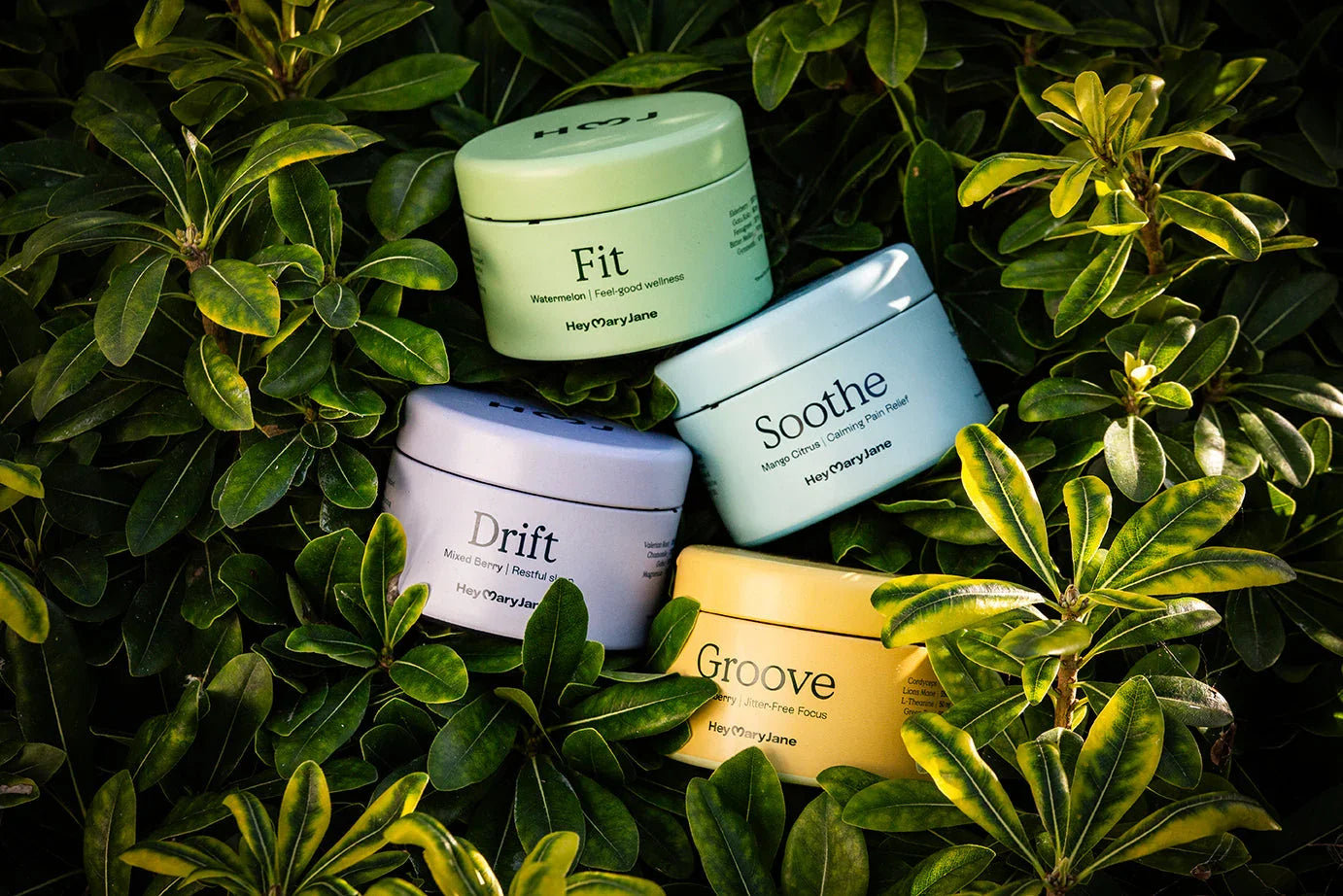
Look for full-spectrum formulations with transparent cannabinoid dosing, third-party lab testing for potency and purity, and formulas that combine CBD with evidence-based adaptogens. Perimenopause is a multi-system event the most effective supplements address the ECS (through CBD and other cannabinoids) and the HPA axis (through adaptogens) simultaneously. Hey Mary Jane's Fit Wellness Gummies were designed specifically for this.
Yes. The same ECS dysregulation that contributes to weight gain also affects sleep, mood, joint pain, inflammation, and cognitive function during perimenopause. CBD's interaction with CB1 and CB2 receptors provides broader regulatory support across these systems. Some women also report improvement in unexpected symptoms like itchy ears and skin reactivity which appear to be connected to the histamine dysregulation that ECS imbalance can cause.
Full-spectrum hemp CBD is generally well-tolerated and available without a prescription. The key precautions: if you are on medications that follow the grapefruit rule (certain blood pressure, cholesterol, or psychiatric medications), CBD may affect how your liver processes them, speak with your pharmacist. If you are on HRT, consult your provider. CBD does not replace estrogen or progesterone and is not a substitute for prescribed hormone therapy when that's the appropriate clinical choice.
CBD interacts with 5-HT1A (serotonin) receptors, which may support mood stability and reduce anxiety, both commonly disrupted during perimenopause. It also helps regulate cortisol, which is a significant driver of irritability and emotional reactivity. Research suggests these effects are dose-dependent and require consistent daily use rather than situational doses.
Most people notice initial effects within 30-60 minutes of taking CBD. For sustained nervous system benefits relevant to perimenopause, better sleep, reduced cortisol reactivity, more stable mood and metabolism, consistent daily use for 2-4 weeks is typically needed before clear patterns emerge. Your endocannabinoid system responds to consistent supplementation differently than it does to single doses.
Brain fog during perimenopause is primarily driven by reduced cerebral blood flow and neuroinflammation as estrogen declines. CBD's anti-inflammatory properties and interaction with cerebral blood vessels may offer some support. For optimal cognitive support, formulations that combine CBD with Gotu Kola and Lion's Mane, both studied for their effects on cognitive function and neuroinflammation provide more comprehensive coverage than CBD alone.
Low-dose THC, in the 0.5mg microdose range may support relaxation, reduce nighttime cortisol, and provide mild relief from physical discomfort during menopause. This is very different from recreational THC doses. At microdose levels, you will not feel psychoactive effects. The goal is nervous system regulation, not impairment. THCV, a different cannabinoid, may be more directly relevant to menopause metabolism and appetite, it's been studied specifically for metabolic support.
Jaime Alefosio BCEHC
Jaime is a seasoned entrepreneur, wellness advocate, and passionate educator, now contributing as an author and blogger for HeyMaryJane.com. With over a decade of expertise in cannabis and hemp research, use, and advocacy. Her extensive knowledge stems not only from rigorous personal research but also from hands-on experience.
In addition to her entrepreneurial achievements, Jaime has recently earned her certification as a Board-Certified Exponential Health Coach. This credential reflects her dedication to empowering others to achieve optimal health through integrative and holistic approaches. She is currently a Doctor of Natural Medicine (DNM) candidate, further deepening her expertise in cutting-edge wellness solutions.
Jaime's blogs on HeyMaryJane.com are informed by her unique blend of scientific rigor, personal experience, and an unwavering commitment to helping others. Her writings provide valuable insights into the transformative power of full-spectrum hemp products, adaptogens, and nootropics, showcasing her deep understanding of natural remedies and their potential to balance the body and enhance well-being.
As a trusted voice in the wellness community, Jaime is committed to delivering educational, authentic, and impactful content that underscores Hey Mary Jane's mission of providing clean, effective alternatives to pharmaceuticals.


