

Can THC Gummies for Arousal Reignite Libido During Perimenopause?
|
|
Time to read 11 min
|
|
Time to read 11 min
Updated Sept. 6 , 2026 . This content is for educational purposes only and is not intended to diagnose, treat, cure, or prevent any disease. Consult your healthcare provider before starting any new supplement.
Quick Answer: THC gummies for female arousal work with your endocannabinoid system (ECS), a regulatory network embedded in your nervous system. During perimenopause, fluctuating estrogen disrupts ECS receptor density. Low-dose THC may support this system by promoting blood flow, reducing stress-driven inhibition, and helping the nervous system shift out of sympathetic overdrive, which is where desire goes to disappear.
Here's the thing nobody told us about perimenopause. It's not just hot flashes and mood swings. For a lot of women, the thing that hits hardest is the one nobody wants to talk about: your desire just... goes quiet.
And it's not because something is wrong with you. It's because your nervous system is doing exactly what it was designed to do under hormonal stress. It's protecting you. It's pulling resources away from "non-essential" functions like libido and redirecting them toward survival.
Your body is not broken. Your system is overwhelmed.
I've spent over a decade researching how cannabinoids interact with the nervous system and the endocannabinoid system (ECS), and this is one of the most misunderstood intersections in women's health right now.
Everyone is selling you a "libido booster." Almost nobody is asking why your nervous system shut desire down in the first place.
That's the question that actually matters.
The endocannabinoid system (ECS) is a cell-signaling network that runs throughout your entire body, including your reproductive tissues, your brain, and your nervous system. It regulates mood, pain perception, immune response, and yes, sexual function.
Your body makes its own cannabinoids (called endocannabinoids) that bind to CB1 and CB2 receptors. CB1 receptors are concentrated in the brain and central nervous system. CB2 receptors are found in peripheral tissues, including pelvic organs.
When this system is functioning well, it supports the cascade of signals that move you from "not thinking about it" to "interested" to "aroused."
THC (tetrahydrocannabinol) is a phytocannabinoid that mimics your body's own endocannabinoids. It binds primarily to CB1 receptors, which is why it influences mood, perception, and sensory experience.
At low doses, it may support the nervous system's ability to shift from a stress-dominant state (sympathetic activation) into a receptive state (parasympathetic activation), which is where arousal actually begins.
Perimenopause typically begins between ages 40 and 50, though some women experience it earlier. During this transition, estrogen and progesterone levels fluctuate unpredictably before eventually declining.
This isn't a smooth curve. It's a rollercoaster, and your ECS feels every turn.
A 2022 review published in the International Journal of Molecular Sciences found that estrogen directly modulates CB1 receptor expression. When estrogen drops, CB1 receptor density decreases in key brain regions involved in mood, reward, and sexual motivation.
This means your nervous system's ability to respond to its own cannabinoid signals weakens during perimenopause.
The downstream effects include decreased blood flow to pelvic tissues, reduced natural lubrication, increased stress reactivity, sleep disruption, mood changes, and yes, a significant drop in sexual desire. None of these are isolated symptoms. They're connected through your nervous system and your ECS.
📌 Honest Note: Research on the ECS and female sexual function is still in early stages. The connection between estrogen, CB1 receptors, and arousal has been demonstrated in preclinical and observational studies, but large-scale clinical trials specifically on THC and female libido during perimenopause have not yet been completed. What we know is promising, but it is not conclusive.
A 2023 survey published in the Journal of Sexual Medicine found that women who used cannabis and hemp before sexual activity reported higher satisfaction, more frequent orgasm, and reduced pain during intercourse. Over 70% of respondents reported enhanced desire when using low doses.
This aligns with what we understand about the ECS mechanism. Low-dose THC appears to support arousal through several pathways:
📌 Honest Note: Dose matters significantly. Higher doses of THC (above 10mg for most women) can increase anxiety, impair arousal, and cause sedation, which is the opposite of what you want. The research consistently points to low-dose use (1-5mg) as the range most associated with positive sexual outcomes.
Not all cannabinoids work the same way. Here's how they differ when it comes to supporting sexual function:
| Factor | Low-Dose THC (1–5mg) | CBD (10–25mg) | THC + CBD Combined |
|---|---|---|---|
| Nervous system shift | Supports parasympathetic activation | Supports stress recovery | Both pathways supported |
| Sensory experience | May heighten tactile sensitivity | Minimal sensory effect | Enhanced with reduced anxiety |
| Blood flow | Vasodilatory properties observed | Mild vasodilatory effect | Complementary support |
| Mental inhibition | May reduce stress-driven mental blocks | May support general tension reduction | Broader coverage |
| Onset (gummies) | 30–90 minutes | 30–60 minutes | 30–90 minutes |
| Duration | 3–6 hours | 4–6 hours | 4–6 hours |
| Risk at high doses | Anxiety, sedation, impaired function | Drowsiness | Reduced risk vs THC alone |
Desire doesn't exist in a vacuum. If you're not sleeping, you're not interested. If your nervous system is running hot all day, it's not going to switch into a receptive state at night.
Here's how perimenopause stacks the deck against intimacy, and how each factor connects back to your nervous system:
This is why a "libido pill" approach doesn't work. You can't supplement your way around a nervous system that is stuck in survival mode. You have to address the system.
If you decide to explore THC gummies as part of your approach to supporting intimacy during perimenopause, here's what the research and lived experience suggest:
Learn about Groove | Focus Gummies —precision-microdosed with THCV for women who want to feel present, not sedated. Each gummy contains a measured dose designed to support your nervous system without overwhelming it.
The THC gummy market has exploded, and not all products are created with the same intention. Here's what matters:
THC gummies interact with CB1 receptors in your endocannabinoid system (ECS), which is embedded in your nervous system. At low doses (1-5mg), THC may support the nervous system's ability to shift from a stress-dominant state into a receptive state, increase blood flow to pelvic tissues, heighten sensory awareness, and reduce the mental inhibition that blocks arousal during perimenopause and menopause.
Research and clinical observations suggest starting with 1-2.5mg of THC, which is considered a microdose. Over 70% of women in a 2023 Journal of Sexual Medicine survey who reported positive sexual outcomes used low doses. Higher doses (above 10mg) can increase anxiety and impair function, producing the opposite of the intended effect.
THC interacts with the endocannabinoid system, which regulates multiple functions affected by perimenopause, including sleep, mood, and stress response. Some women report that low-dose THC supports sleep quality, emotional regulation, and general comfort during the perimenopausal transition. These benefits may indirectly support libido by addressing the root nervous system dysregulation.
Hemp-derived THC gummies containing less than 0.3% Delta-9 THC by dry weight are legal under the 2018 Farm Bill. However, safety depends on individual health status, current medications, and dose. Women on hormone replacement therapy, antidepressants (especially SSRIs), or medications metabolized by CYP enzymes should consult their healthcare provider before using THC products.
THC gummies typically take 30-90 minutes to reach full effect, depending on metabolism, body weight, and whether they are taken with or without food. Plan to take your gummy approximately 60 minutes before you want to feel the effects. The experience generally lasts 3-6 hours.
THC and CBD interact with different receptors in the endocannabinoid system. THC binds directly to CB1 receptors in the brain and nervous system, which may heighten sensory experience and support the nervous system's shift into a receptive state. CBD works more indirectly, supporting stress recovery and general tension reduction without the sensory amplification. Some women find that combining both cannabinoids provides broader support.
At higher doses, THC can cause anxiety, dry mouth, dizziness, and sedation, all of which can impair rather than support intimacy. This is why dose matters. Starting at 1-2.5mg and increasing gradually allows you to find the threshold where you feel supported but not impaired. If you feel anxious or overly sedated, the dose is too high.
THC has vasodilatory properties, meaning it may support blood flow to tissues including pelvic organs. Increased blood flow to vaginal tissues can support natural lubrication and sensitivity. However, THC gummies are not a replacement for topical solutions designed specifically for vaginal dryness. Some women use both approaches as part of a broader strategy.
Hemp-derived THC gummies containing less than 0.3% Delta-9 THC by dry weight are federally legal under the 2018 Farm Bill. State laws vary, and some states have additional restrictions on hemp-derived THC products. Check your state's current regulations before purchasing.
Some women combine low-dose THC with adaptogens (like ashwagandha or maca), nervines, and amino acids that support the nervous system through complementary pathways. If you are taking prescription medications, consult your healthcare provider before combining supplements. THC is processed by CYP enzymes in the liver, and some supplements and medications share these metabolic pathways.
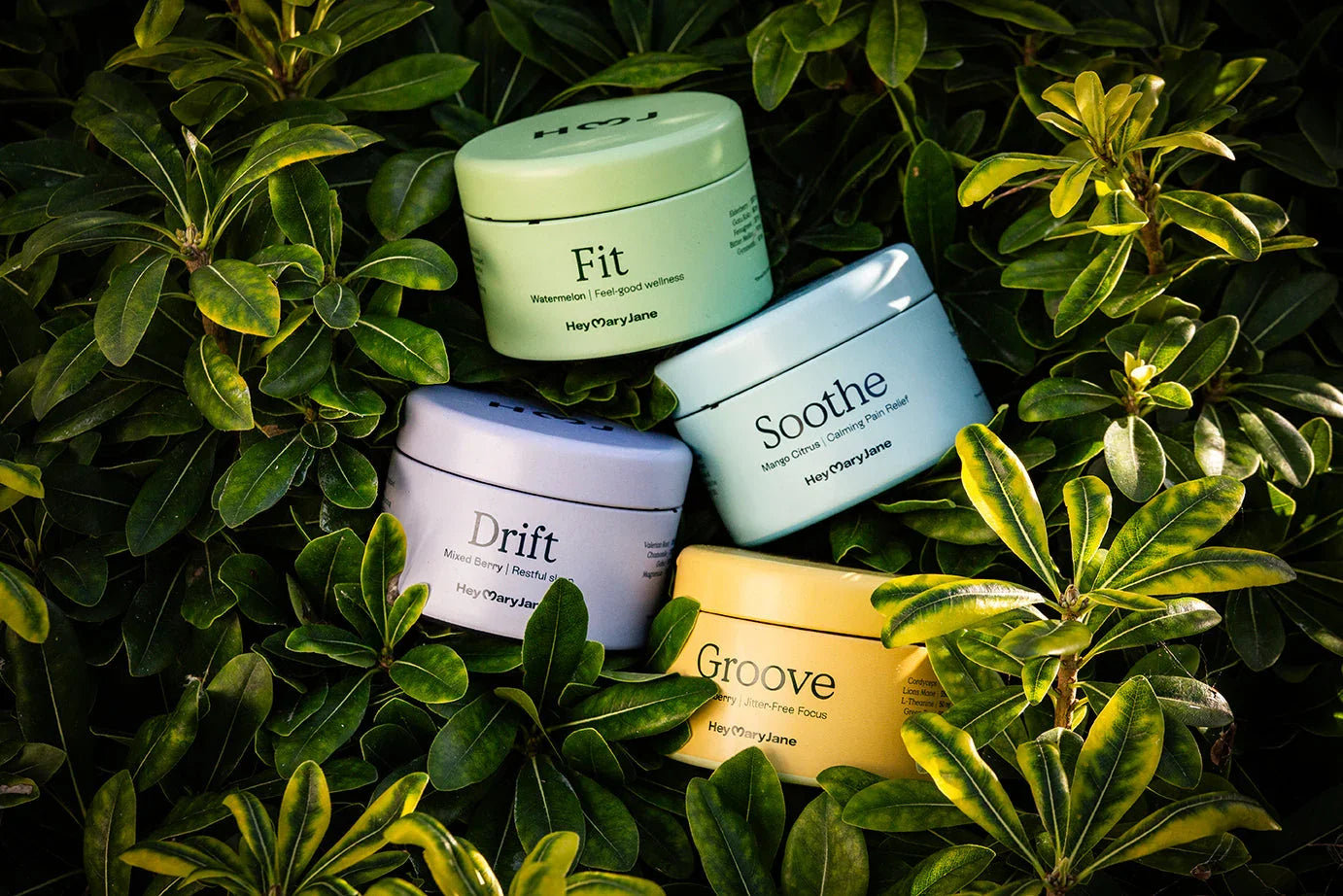
Learn about the Hey Mary Jane Collection — four precision-microdosed formulas designed around your nervous system, not your symptoms. Groove, Drift, Soothe, and Fit each target a different regulatory function.
Lowe et al., Journal of Sexual Medicine, 2023 — Cannabis use and female sexual function
Casteels et al., International Journal of Molecular Sciences, 2022 — Estrogen modulation of CB1 receptor expression
Lynn et al., Sexual Medicine Reviews, 2019 — The relationship between cannabis use and sexual frequency
Kasman et al., Journal of Sexual Medicine, 2020 — Association between cannabis use and sexual frequency in US adults
Slavin et al., Journal of Cannabis Research, 2023 — Cannabis and perimenopause: a scoping review
Lanz et al., Cannabis and Cannabinoid Research, 2023 — ECS and reproductive function
Jaime Alefosio BCEHC
Jaime is a seasoned entrepreneur, wellness advocate, and passionate educator, now contributing as an author and blogger for HeyMaryJane.com. With over a decade of expertise in cannabis and hemp research, use, and advocacy. Her extensive knowledge stems not only from rigorous personal research but also from hands-on experience.
In addition to her entrepreneurial achievements, Jaime has recently earned her certification as a Board-Certified Exponential Health Coach. This credential reflects her dedication to empowering others to achieve optimal health through integrative and holistic approaches. She is currently a Doctor of Natural Medicine (DNM) candidate, further deepening her expertise in cutting-edge wellness solutions.
Jaime's blogs on HeyMaryJane.com are informed by her unique blend of scientific rigor, personal experience, and an unwavering commitment to helping others. Her writings provide valuable insights into the transformative power of full-spectrum hemp products, adaptogens, and nootropics, showcasing her deep understanding of natural remedies and their potential to balance the body and enhance well-being.
As a trusted voice in the wellness community, Jaime is committed to delivering educational, authentic, and impactful content that underscores Hey Mary Jane's mission of providing clean, effective alternatives to pharmaceuticals.
These statements have not been evaluated by the Food and Drug Administration. This product is not intended to diagnose, treat, cure, or prevent any disease. Hey Mary Jane products are dietary supplements. If you are pregnant or nursing, do not use. Consult your physician before using this product, especially if you are taking prescription medications or have a chronic medical condition. THC is metabolized by cytochrome P450 enzymes (CYP3A4, CYP2C9). If you take medications that carry a grapefruit warning, consult your pharmacist before using THC products.


