

Cannabinoids and the Parasympathetic Nervous System: How CBD and THC Support Autonomic Balance
|
|
Time to read 7 min
|
|
Time to read 7 min
Quick Answer: CBD and THC support parasympathetic function through the endocannabinoid system. CBD activates TRPA1 ion channels that influence vagus nerve activity. THC engages CB1 receptors in autonomic brain circuits to promote parasympathetic recovery. Together, they help the nervous system shift from sympathetic overdrive into restoration mode without sedation.
By Jaime Alefosio, Board-Certified Exponential Health Coach, Doctor of Natural Medicine Candidate | Over a decade of cannabinoid research
Table of contents
Most people talk about stress like it's a mood. It's not. It's a full-body broadcast that your nervous system is stuck in overdrive.
When your sympathetic system (that fight-or-flight mode) is always on, your body forgets how to coast. Digestion slows, cortisol spikes, sleep goes MIA. That's where your parasympathetic nervous system (PNS) steps in. It's your built-in recovery switch, the one that slows your heart rate, deepens your breath, and helps your body actually recover from the chaos.
And as it turns out, cannabinoids like CBD and THC are fluent in parasympathetic language.
Most people talk about stress like it's a mood. It's not. It's a full-body broadcast that your nervous system is stuck in overdrive.
When your sympathetic system (that fight-or-flight mode) is always on, your body forgets how to coast. Digestion slows, cortisol spikes, sleep goes MIA. That's where your parasympathetic nervous system (PNS) steps in. It's your built-in recovery switch, the one that slows your heart rate, deepens your breath, and helps your body actually recover from the chaos.
And as it turns out, cannabinoids like CBD and THC are fluent in parasympathetic language.
The PNS is the counterweight to your stress response. It's part of your autonomic nervous system, the one you don't consciously control. Think of it as the invisible DJ mixing your inner rhythm: heart rate, digestion, immune function, hormones.
When it's dialed in, your body can rest, digest, and repair. When it's depleted, you might experience anxiety, sleep issues, gut problems, or that wired-and-tired feeling that coffee can't fix.
Your endocannabinoid system (ECS), made of CB1 and CB2 receptors, enzymes, and endocannabinoids like anandamide, is the command center that helps your body maintain homeostasis. CB1 receptors in your brainstem and vagal nuclei directly regulate both sympathetic and parasympathetic tone (Ibrahim & Bhatt, Journal of Advanced Research, 2015). The ECS helps your body switch gears between activation and recovery.
When your ECS is nourished, say with cannabinoids like CBD or THC, your nervous system remembers how to downshift again.
Let's set the record straight: THC isn't just about getting high. In moderate doses, it can actually help your nervous system slow down.
A 2024 human trial showed that oral delta-9-THC increased parasympathetic dominance, measured through improved heart rate variability (HRV), a key marker of autonomic recovery. THC appears to stimulate brain circuits connecting the prefrontal cortex and rostral ventrolateral medulla, reducing that constant "alert" signal we know too well.
In other words, the right dose of THC helps your body exhale, quite literally, by encouraging vagal restoration and supporting your autonomic tone.
When I was working through Lyme, my nervous system was like a live wire. Every sound, every text, every thought felt overstimulating. When I began microdosing THC (we're talking sub-3mg, not space-travel doses), I noticed my HRV finally started climbing. My heart wasn't racing all day. My body remembered safety again.
If THC presses the brake, CBD tunes the frequency.
CBD interacts with TRPA1 ion channels that influence vagus nerve activity, the main highway of the parasympathetic nervous system. This activation helps slow the heart rate, improve digestion, and quiet inflammatory signals.
Research has compared CBD's effects to vagus nerve stimulation (VNS) therapy, the same kind used for anxiety and PTSD, and found surprisingly similar outcomes in stress recovery (PMC, 2021).
📌Honest Note: The comparison between CBD and clinical vagus nerve stimulation therapy is based on overlapping outcome measures, not a direct head-to-head trial. VNS is an FDA-approved medical device intervention. CBD's vagal effects, while supported by preclinical and observational data, have not been evaluated in the same rigorous controlled trial framework. The parallel is promising but preliminary.
CBD doesn't knock you out. It nudges your nervous system to find its baseline again, to come back to a range where recovery is possible without sedation.
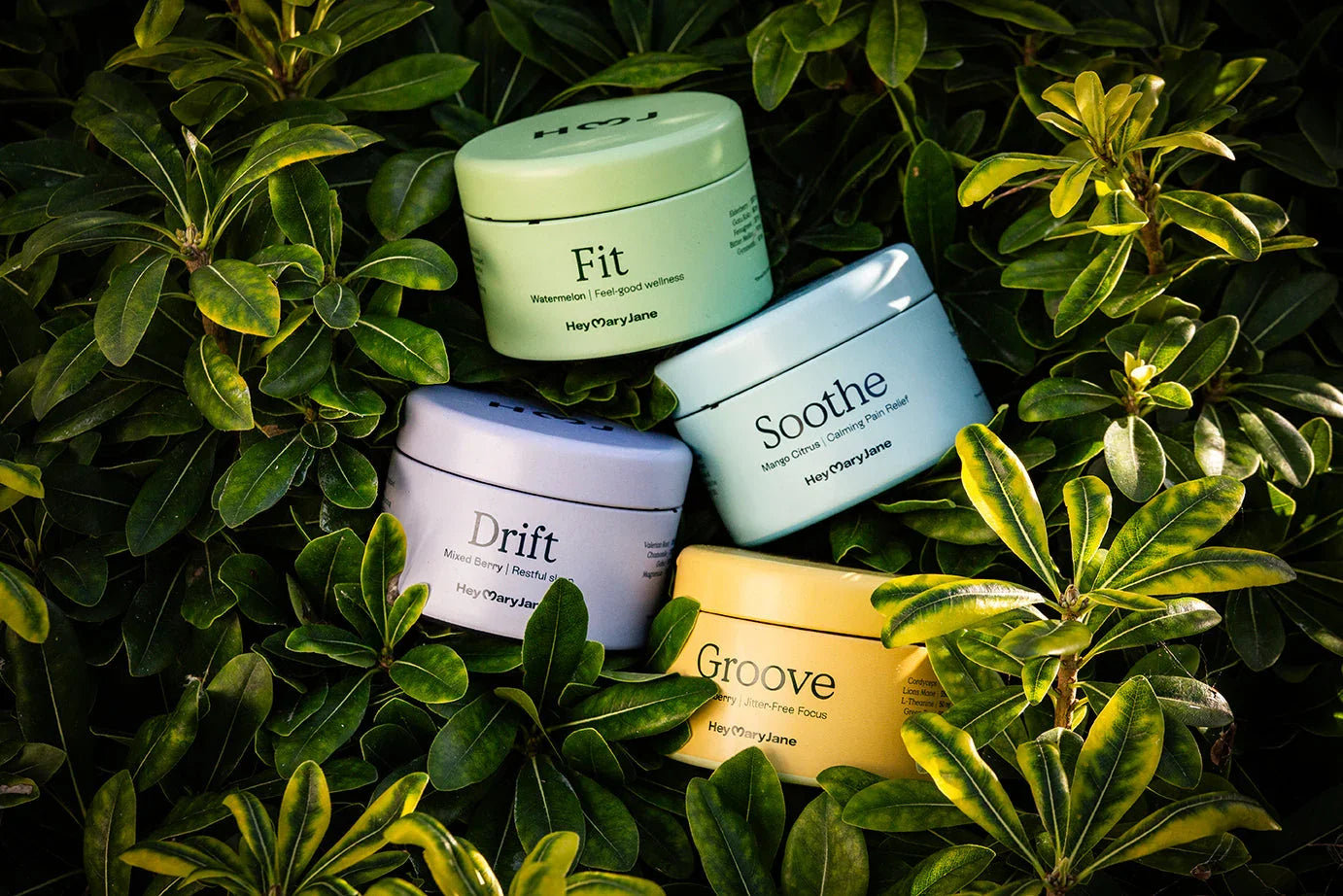
That's why Soothe exists. It combines full-spectrum CBD, CBG, turmeric, and piperine to support parasympathetic recovery and tension regulation without dulling your spark.
Your vagus nerve is like the body's built-in feedback loop. It regulates inflammatory signals, mood, and stress hormones. When vagal tone is low, the body can't recover after triggers. Cannabinoids that stimulate vagal activity (especially CBD and low-dose THC) help retrain this reflex.
Research on CBD and vagal afferent neurons concluded that CBD activates vagal pathways through TRPA1 channels, supporting stress resilience through improved vagal tone (PMC, 2021). That's why people often describe it as feeling like they're "coming back online."
Think of it as neuro-somatic regulation: your ECS and PNS syncing up to remind your body that safety isn't just a mindset. It's a physiological state.
📌Honest Note: Most research on cannabinoids and autonomic regulation has been conducted in small samples, animal models, or observational settings. Large-scale, randomized controlled trials examining CBD or THC specifically for vagal tone improvement in humans are still needed. The mechanistic evidence is strong, but definitive clinical protocols have not been established.
| Cannabinoid | Mechanism | Effect on Parasympathetic System | Best For |
|---|---|---|---|
| THC | CB1-mediated brain circuits | Increases parasympathetic tone and HRV | Sleep, pain signaling, autonomic anxiety |
| CBD | TRPA1-mediated vagal activation | Stimulates vagal afferents directly | Stress recovery, gut-brain signaling |
| Anandamide (endocannabinoid) | CB1 and CB2 signaling | Modulates sympathetic and parasympathetic tone | Daily autonomic regulation |
Here's how to start supporting your vagal tone naturally, without forcing anything:
Your body doesn't need to be sedated. It needs communication between your brain, gut, heart, and breath. That's what cannabinoids do best: they help your body talk to itself again.
So next time you feel your shoulders creeping up or your thoughts racing, remember: your parasympathetic system has your back. You just have to give it the right signals, and maybe a little plant-based support, to hear it.
CBD influences TRPA1 ion channels that activate vagus nerve pathways, which are the primary drivers of parasympathetic function. This activation supports stress recovery, digestive signaling, and heart rate regulation. The mechanism is distinct from sedation: CBD supports the nervous system's own recovery process rather than overriding it.
In moderate doses, yes. A 2024 human trial found that oral delta-9-THC increased HRV and promoted parasympathetic recovery without suppressing normal autonomic function. HRV is one of the most reliable markers of how well the nervous system shifts between activation and recovery.
The endocannabinoid system is a regulatory network of receptors (CB1, CB2), enzymes, and endogenous ligands that modulates both sympathetic and parasympathetic activity. The parasympathetic system is one branch of the autonomic nervous system responsible for rest, digestion, and recovery. The ECS acts as a modulator across the entire autonomic spectrum.
Soothe is formulated for daytime nervous system support, combining full-spectrum CBD with CBG, turmeric, and piperine to support vagal regulation and tension recovery. It's designed to help the parasympathetic system function without sedation or cognitive dulling.
Jaime Alefosio BCEHC
Jaime is a seasoned entrepreneur, wellness advocate, and passionate educator, now contributing as an author and blogger for HeyMaryJane.com. With over a decade of expertise in cannabis and hemp research, use, and advocacy. Her extensive knowledge stems not only from rigorous personal research but also from hands-on experience.
In addition to her entrepreneurial achievements, Jaime has recently earned her certification as a Board-Certified Exponential Health Coach. This credential reflects her dedication to empowering others to achieve optimal health through integrative and holistic approaches. She is currently a Doctor of Natural Medicine (DNM) candidate, further deepening her expertise in cutting-edge wellness solutions.
Jaime's blogs on HeyMaryJane.com are informed by her unique blend of scientific rigor, personal experience, and an unwavering commitment to helping others. Her writings provide valuable insights into the transformative power of full-spectrum hemp products, adaptogens, and nootropics, showcasing her deep understanding of natural remedies and their potential to balance the body and enhance well-being.
As a trusted voice in the wellness community, Jaime is committed to delivering educational, authentic, and impactful content that underscores Hey Mary Jane's mission of providing clean, effective alternatives to pharmaceuticals.


