

Key Takeaways:
- CBD vs. CBG 101: Both come from hemp, but they vibe differently with your body. CBD is the steady one — think calm and balance. CBG is the sharp-minded multitasker — focused, clear, and physically grounding.
- Stack ‘em: CBD + CBG together? Chef’s kiss. You get the daytime clarity and the nighttime calm.
- Finding your Delivery Method: Oils, gummies, capsules, or topicals all deliver a different rhythm. (Hint: gummies are the easiest way to make wellness feel like a treat.)
A Modern Look at an Ancient Duo
If you've ever lived in that space between wired and wiped out, you know the feeling: your mind's racing, your body's tense, and your nervous system is just... done. I used to live there 24/7 while dealing with chronic pain and the burnout that comes with pushing through it. I tried everything: adaptogens, meditation, even the occasional glass of wine (or two) to take the edge off.
Nothing truly clicked until I started microdosing cannabinoids. That's when I discovered Soothe, a microdosed blend of CBD and CBG that didn't knock me out, but instead brought me back to center.
That's the real beauty of these two compounds. CBD helps the body exhale, easing tension, calming inflammation, and quieting the noise. CBG keeps you grounded and focused, like your brain finally stopped buffering. Together, they don't change who you are, they help you feel more like yourself again.

At a Glance: Key Differences Between CBD and CBG
CBD (cannabidiol) and CBG (cannabigerol) are both non-intoxicating compounds found in hemp. But here's where it gets cool: CBG is the "mother cannabinoid." Its acidic form (CBGA) is the chemical starting point for most other cannabinoids, including CBD and THC. Without CBG, you wouldn't even have CBD.
Think of it like this: if cannabinoids were a family, CBG would be the matriarch, wise, grounding, and subtly running the show behind the scenes. CBD? The calm middle child everyone loves because they make stressful situations manageable.
How They Work in the Body (and Why It Matters for Your Nervous System)
Your body has an entire communication network called the endocannabinoid system (ECS) — it’s like your internal thermostat for mood, stress, pain, and sleep. CBG and CBD both interact with this system, but they speak slightly different “dialects.”
- CBD is a modulator. It doesn’t bind tightly to receptors but helps your own endocannabinoids stick around longer, encouraging balance in the background.
- CBG is a direct communicator. It binds more closely to CB1 and CB2 receptors, giving its effects that sharp, clear, focused feel.
As someone studying to be a Doctor of Natural Medicine, I geek out over this. The ECS plays directly into your nervous system’s tone — the balance between “fight-or-flight” and “rest-and-digest.” Microdosing cannabinoids helps the body recalibrate that tone gently over time, nudging you away from stress and toward stability.
In plain terms: CBD helps your body exhale; CBG helps it stay alert without the anxiety.
Comparing Their Contributions: Calm vs. Clarity
Both CBD and CBG are all about balance — but they show up differently.
|
Goal |
Try CBD |
Try CBG |
|
Easing stress & anxiety |
Encourages calm, supports serotonin balance |
Supports clear-headed focus, stabilizes mood |
|
Pain & inflammation |
Strong anti-inflammatory support |
Targeted relief, physical ease |
|
Focus & motivation |
Softens distraction |
Sharpens mental clarity |
|
Sleep & recovery |
Encourages rest and relaxation |
Complements rest by supporting daytime energy |
If you’re anything like me (a recovering overthinker), you might use Soothe during the day to keep stress at bay, then switch to Drift at night to help your body settle. The combo keeps my nervous system in check and my brain from spiraling into “doom scroll” territory.

Why Their Differences Actually Matter
Here's the truth most wellness blogs skip: your body doesn't need more stimulation, it needs regulation.
CBD and CBG differ in how they help the body self-regulate.
- CBD is like a weighted blanket for your nervous system, steady, grounding, easing overstimulation.
- CBG is the sunrise, energizing your focus, supporting dopamine balance, and helping you feel present.
Their differences matter because life happens in cycles. You can't be "on" all day or "off" all night. You need rhythm, and these cannabinoids help restore it.
When your ECS and nervous system are in sync, your heart rate variability (HRV), a key sign of resilience, improves. That's not woo; it's measurable biology. It's why I often say: frequency is physiology. When you're balanced internally, your energy frequency literally shifts.
The Nervous System Connection (Why Microdosing Works Differently)
Microdosing cannabinoids isn't about "more." It's about giving your system a gentle signal it can actually integrate.
Here's what's happening under the hood:
- Small, consistent doses of CBD and CBG retrain your nervous system's baseline, reducing chronic stress responses.
- They help restore neurotransmitter balance, think serotonin (mood), GABA (calm), and dopamine (focus).
- Over time, microdosing strengthens your body's feedback loops, creating a steadier, calmer foundation.
As an Exponential Health Coach, I see this every day in biofeedback data: when the nervous system feels safe, everything else follows: digestion, sleep, hormones, focus.
That's why Hey Mary Jane's formulas are microdosed by design. They're not about blasting your receptors, they're about tuning your system.
Stacking CBD and CBG: The “Better Together” Effect
Choosing Your Delivery Method (and Why Gummies Just Hit Different)
There’s no one right way to enjoy cannabinoids it depends on your lifestyle and what you’re tuning into.
Oils and Tinctures
Sublingual oils are classics. They absorb quickly and let you control your dose drop by drop. Great for anyone who likes precision and instant feedback.
Capsules and Softgels
The no-mess option. Pre-measured, portable, discreet. Perfect for your work bag or travel kit.
Edibles (like Gummies)
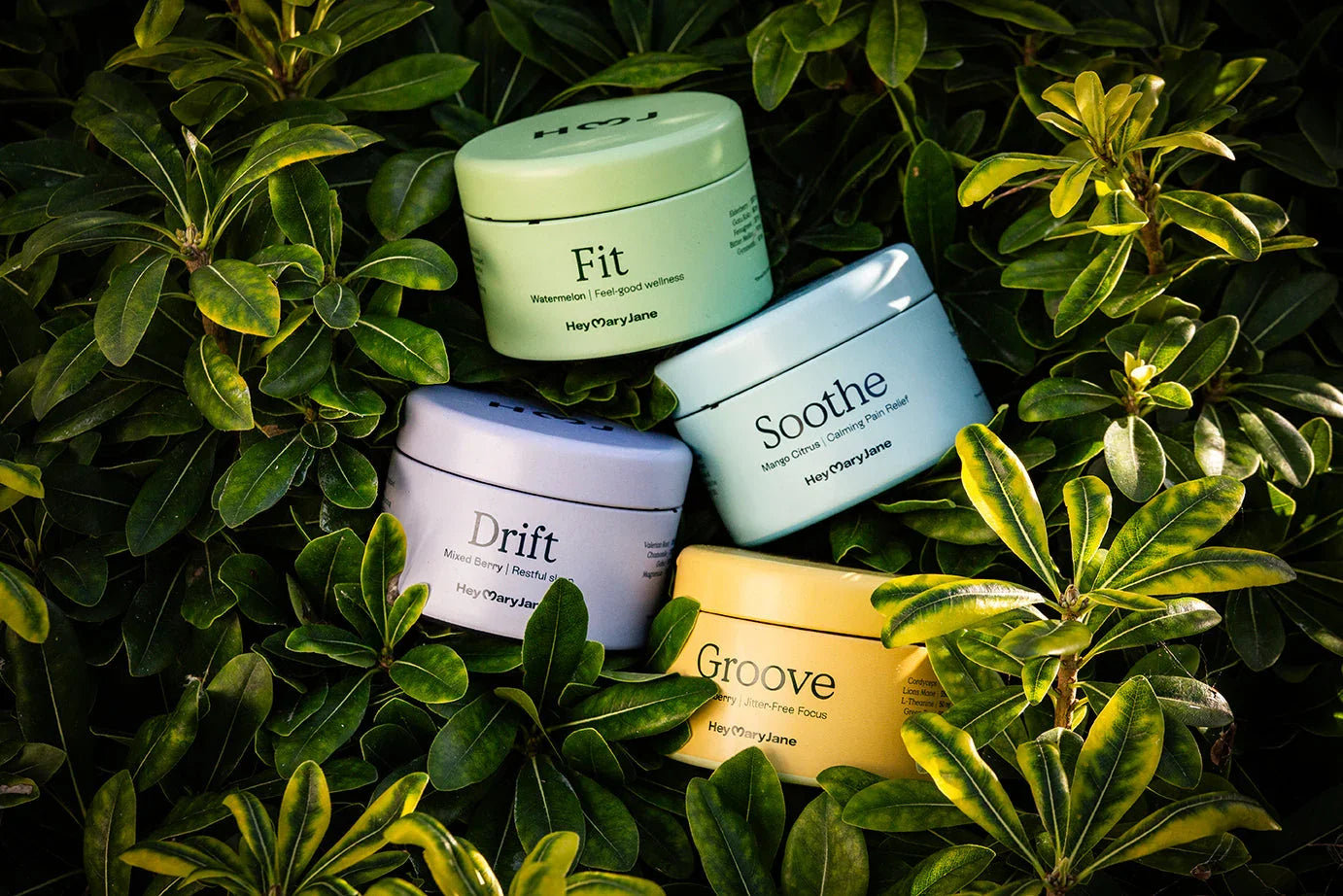
Slow onset, long-lasting effect. This is where Hey Mary Jane shines. Gummies like Soothe, Groove, and Drift are designed for real life — they taste good, feel natural, and make consistency easy.
Topicals
Balms and creams deliver targeted relief to muscles and joints. I use them after the gym or when my Lyme flare-ups sneak in.
Safety, Dosing, and Microdosing Guidelines
Because you're working with your body's natural systems, cannabinoids are generally well-tolerated. But, and this is a big but, dose matters.
- Start low and slow. Most people find 5–20mg of CBD and 1–5mg of CBG is enough to feel the shift. That's why our formulas are microdosed, so your body stays in tune without being overwhelmed.
- Be consistent. It's not about instant gratification; it's about building balance. I always tell people to give it 10–14 days before judging. That's how long it takes your ECS to recalibrate.
- Pay attention to feedback. If you feel groggy, lower your dose. If you're still wired, you may need more consistency, not more product.
Remember: your ECS wants rhythm, not rescue.
Which Cannabinoid Fits Your Wellness Goals?
- For Restful Sleep: Try Drift — CBD, CBN, and a micro-dose of THC with Valerian Root and Magnesium. It helps you stay asleep, not just fall asleep.
- For Stress and Daily Balance: Soothe — CBD + CBG + Turmeric + Piperine. Ideal for easing inflammation and calming your body’s stress response.
- For Focus and Flow: Groove — THCV + CBG + CBD + Cordyceps + Lion’s Mane. For when your brain needs a tune-up, not a time-out.
-
For Immunity and Hormone Support: Fit — CBD + Adaptogens for total-body resilience.
Final Thoughts
Bringing CBD and CBG into your life isn't about chasing calm or clarity, it's about restoring your natural rhythm. These compounds work with your body, not against it.
CBD helps you exhale; CBG helps you focus. Together, they make wellness feel like alignment, not effort.
That's what we're all about at Hey Mary Jane: rooted in nature, backed by science, and crafted for real life. Because balance shouldn't feel like a full-time job, it should feel like coming home to yourself.
Frequently Asked Questions About CBG vs. CBD
Which is better for anxiety: CBG or CBD?
CBD still leads for calming the mind and easing tension, while CBG supports focus without fog. Many find the best results come from pairing the two — like in our Soothe Gummies.
Which is better for pain relief?
CBD is more researched for inflammation and pain modulation, but CBG adds muscle and joint support. Combining them often delivers fuller relief.
Can either help with sleep?
Yes — CBD helps set the stage for rest, while CBG supports next-day clarity. For true sleep magic, try Drift, which layers CBN into the mix.
Will CBG or CBD get me high?
Nope. Neither is intoxicating. You’ll feel balanced, not buzzed.
How long do they last?
Edibles (like gummies) last 4–6 hours. Oils act faster but fade sooner.
Are they safe?
Both are well-tolerated. Always start with low doses and check labels for third-party testing (we’ve got you covered there).
Jaime Alefosio BCEHC
Jaime is a seasoned entrepreneur, wellness advocate, and passionate educator, now contributing as an author and blogger for HeyMaryJane.com. With over a decade of expertise in cannabis and hemp research, use, and advocacy. Her extensive knowledge stems not only from rigorous personal research but also from hands-on experience.
In addition to her entrepreneurial achievements, Jaime has recently earned her certification as a Board-Certified Exponential Health Coach. This credential reflects her dedication to empowering others to achieve optimal health through integrative and holistic approaches. She is currently a Doctor of Natural Medicine (DNM) candidate, further deepening her expertise in cutting-edge wellness solutions.
Jaime's blogs on HeyMaryJane.com are informed by her unique blend of scientific rigor, personal experience, and an unwavering commitment to helping others. Her writings provide valuable insights into the transformative power of full-spectrum hemp products, adaptogens, and nootropics, showcasing her deep understanding of natural remedies and their potential to balance the body and enhance well-being.
As a trusted voice in the wellness community, Jaime is committed to delivering educational, authentic, and impactful content that underscores Hey Mary Jane's mission of providing clean, effective alternatives to pharmaceuticals.
Sources:
- Li, S., et al. (2024). Cannabigerol (CBG): A comprehensive review of its molecular mechanisms and therapeutic potential. Molecules, 29(22), 5471.
- CannaMD. How to microdose marijuana. CannaMD
- WebMD. Health benefits of valerian root. WebMD
- WebMD. Supplement guide: Chamomile. WebMD
- Shmerling, R. H. (2025). What can magnesium do for you and how much do you need? Harvard Health
- Salha, M., et al. (2023). Bioactivity of the cannabigerol cannabinoid and its analogues – the role of 3-dimensional conformation. Organic & Biomolecular Chemistry, 21(22), 4683-4693.

