

Is It Perimenopause or Stress? How to Tell the Difference
|
|
Time to read 10 min
|
|
Time to read 10 min
Quick Answer: Perimenopause and chronic stress produce nearly identical symptoms because both run through the HPA axis and autonomic nervous system. For most women in this stage, the answer is not one or the other but both, and addressing the nervous system is foundational. Declining estrogen thins the stress buffer while elevated cortisol accelerates hormonal disruption, creating a self-reinforcing cycle that requires multi-pathway support.
This content is for educational purposes only and is not medical advice. Consult your healthcare provider before adding any new supplement.
By Jaime Alefosio, Board-Certified Exponential Health Coach, Doctor of Natural Medicine Candidate | Over a decade of cannabinoid research
So, I had a conversation with a woman last week, 42, runs a team of twelve, hasn't slept through the night in four months. Her doctor told her it was stress. Her friend told her it was perimenopause. Her therapist told her she needed better boundaries. Three professionals, three different answers, and she's sitting in my DMs at 11pm asking a gummy company what's wrong with her body.
I'm going to tell you what I told her, because I think a lot of you are living some version of this right now and nobody has explained why the answers keep contradicting each other. So here's what I walked her through and what I want to walk you through now starting with why these two things look identical on the inside.
Perimenopause and chronic stress produce almost identical symptoms. Brain fog, sleep disruption, irritability that shows up sideways, anxiety that didn't used to be there, fatigue that sleep doesn't fix. The reason the symptoms overlap is not a coincidence, it's anatomy.
Both conditions run through the same infrastructure in your body: the hypothalamic-pituitary-adrenal (HPA) axis and your autonomic nervous system. Estrogen, which starts fluctuating during perimenopause, modulates cortisol receptor sensitivity, serotonin synthesis, GABA activity, and thermoregulation. When estrogen gets erratic, the nervous system loses a stabilizing input it's relied on since puberty. And the downstream picture looks almost identical to what happens when cortisol stays elevated from chronic stress.
Research on neuroendocrine pathogenesis of perimenopausal depression confirms this interaction between the HPA and HPG axes.
Your doctor isn't wrong. Your friend isn't wrong. They're both looking at the same nervous system disruption from different entry points.
If your menstrual cycle has changed, that's the biggest signal. I don't mean one late period after a stressful month. I mean a pattern shift over several months... shorter cycles, heavier flow, skipped months, a cycle that used to be clockwork and now does whatever it wants. Stress can delay a period. It doesn't rearrange the entire pattern for months at a time.
Vasomotor symptoms are the second one. Hot flashes and night sweats are driven by thermoregulatory instability from estrogen fluctuation. Stress makes you sweat. It doesn't hijack your thermostat in that particular way: the sudden wave of heat that rises from your chest, lasts 1 to 5 minutes, and leaves you soaked at 3am. A 2020 study following 101 perimenopausal women found that those with more severe vasomotor symptoms showed a blunted cortisol awakening response, suggesting HPA exhaustion rather than hyperactivation.
Third is age and timing. If you're between 38 and 52 and the symptoms crept in gradually without a clear external trigger, the hormonal transition is worth investigating.
Here's where most content on this topic stops short. The articles give you two columns, perimenopause on one side and stress on the other, and ask you to pick. But for most women in this stage of life, its not perimenopause or stress, the answer is both. And the interaction between them is what makes the experience so disorienting.
Perimenopause lowers the nervous system's stress threshold. The research is clear... declining estrogen reduces cortisol receptor sensitivity. The exact same stress load you handled at 32 now overwhelms the system at 43. You didn't get weaker. Your stress buffer got thinner because one of its key inputs started fluctuating.
Meanwhile, chronic stress accelerates the hormonal transition's impact. Elevated cortisol competes with progesterone through what's sometimes described in functional medicine as the pregnenolone steal, where the body prioritizes cortisol production at the expense of sex hormones. The stress makes the perimenopause worse. The perimenopause makes the stress tolerance lower. Right? It feeds itself.
📌Honest note: The pregnenolone steal is a model used in functional medicine to explain hormonal competition under chronic stress. It is a useful clinical framework, but it is not universally accepted in conventional endocrinology. The biochemistry of steroid hormone synthesis is more complex than a simple either/or pathway, and individual responses vary based on genetics, adrenal reserve, and baseline hormonal status.
This is why addressing only one side doesn't work. I've watched women go on hormone therapy and get the hot flashes handled but still have the reactivity, the sleep disruption, the brain fog partially intact. Because the nervous system dysregulation was never addressed.
These patterns are general indicators, not diagnostic criteria. A healthcare provider can help you confirm what’s driving your specific symptoms.
Signal |
Perimenopause Pattern |
Chronic Stress Pattern |
How to Tell the Difference |
|---|---|---|---|
Sleep disruption |
Waking at 2–4 AM, often with night sweats; tied to progesterone decline |
Difficulty falling asleep; racing mind at bedtime; cortisol staying elevated into evening |
Perimenopause waking is sudden and physical (heat, then awake). Stress insomnia is mental — you can’t stop thinking. |
Cycle changes |
Shorter or longer cycles, heavier flow, skipped months — a pattern shift over several months |
A late or missed period after acute stress, then cycles return to baseline |
Stress delays one cycle. Perimenopause rearranges the whole pattern. |
Brain fog |
Worsens mid-cycle or premenstrually; tied to estrogen fluctuations affecting acetylcholine |
Worsens under pressure or sleep deprivation; clears on vacation or after rest |
If brain fog follows your cycle, that’s hormonal. If it follows your workload, that’s stress. |
Mood shifts |
Irritability or anxiety that arrives without a trigger; not tied to external events |
Irritability or anxiety with a clear trigger — deadline, conflict, overload |
Perimenopause mood shifts feel disproportionate to the situation. Stress mood shifts match it. |
Hot flashes / night sweats |
Sudden wave of heat rising from chest, lasting 1–5 minutes; thermoregulatory instability from estrogen fluctuation |
General overheating, sweating under pressure, but no sudden “wave” pattern |
The chest-rising wave pattern is the distinguishing signal. Stress sweating doesn’t have that signature. |
Fatigue quality |
Exhaustion that sleep doesn’t fix; “wired but tired” despite adequate hours |
Exhaustion that improves with real rest; energy returns after recovery |
If a full weekend of sleep fixes it, that’s stress. If it doesn’t, something beyond workload may be driving it. |
Recovery response |
Symptoms persist or worsen even when external stress is removed |
Symptoms improve significantly when stressors are removed or managed |
The vacation test — do symptoms resolve when stress does? If not, something else is driving them. |
Stop trying to figure out which one it is and start asking what your nervous system needs to handle both.
Sleep quality is the foundation. Research published in Current Biology showed that even partial sleep restriction significantly increases emotional reactivity and tanks your ability to modulate negative affect. I didn't need a study to tell me that... I lived it. But it's useful to know the mechanism. If sleep is compromised, everything else gets louder.
Daytime nervous system support matters because cortisol patterns during perimenopause often run higher in the evening when they should be declining. Supporting the body's ability to modulate the stress response during waking hours reduces the load that disrupts sleep at night.
And the endocannabinoid system plays a documented role in both hormonal modulation and stress response regulation. CB1 receptor activity influences cortisol feedback loops, sleep-wake cycles, thermoregulation, and emotional processing. Supporting ECS function during perimenopause addresses multiple disrupted pathways at once because the ECS sits upstream of many of these symptoms.
📌 Honest note: Research on the endocannabinoid system's role in perimenopause is largely preclinical and observational. The CB1 receptor mechanisms described here are well-documented in animal models and early human studies, but large-scale randomized controlled trials specifically examining ECS support during the perimenopausal transition are still limited. This is an active and promising area of research, not a settled science.
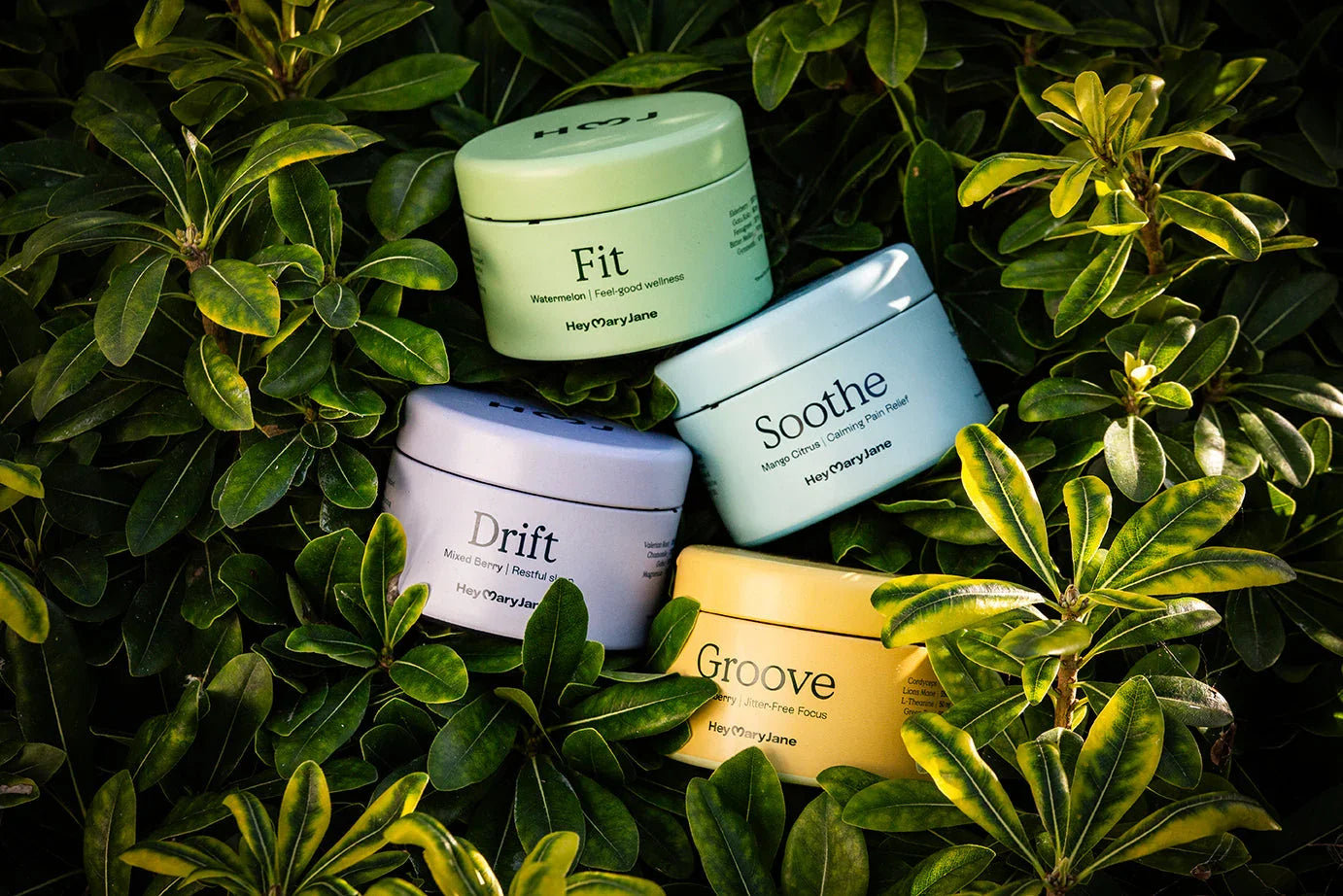
This is why I built the formulas the way I did. Fit for daytime nervous system support with adaptogens that have documented effects on cortisol modulation. Drift for nighttime recovery. Not because I think gummies fix perimenopause... they don't. But because the nervous system needs consistent regulatory support during a transition that destabilizes it from multiple directions simultaneously, and most women are getting zero support on that front.
If you want objective data, don't let your doctor run a single FSH draw and call it a day. FSH fluctuates dramatically during perimenopause... one draw is a snapshot, not a trend. Ask for FSH on day 3 of your cycle, repeated over 2 to 3 cycles.
A four-point cortisol curve (morning, noon, evening, bedtime) tells you more about your nervous system's stress load than any single morning cortisol draw. This is the test that shows whether your cortisol is staying elevated into the evening.
And if your doctor tells you your labs are "normal" but your body says otherwise... trust the disconnect. Normal ranges are wide. You can be within range and still be far from where your body functions well. The labs provide data. Your experience provides context. Both matter.
Yes. Chronic stress and perimenopause run through the same infrastructure in your body the HPA axis and the autonomic nervous system. Both can produce brain fog, sleep disruption, irritability, fatigue, and anxiety. The distinguishing factor is usually pattern: stress symptoms track with your workload and improve with genuine rest, while perimenopause symptoms tend to follow your cycle or persist regardless of external stressors.
Not only can you experience both simultaneously, most women in this stage do. Declining estrogen lowers the nervous system’s stress threshold, which means the same stress load you managed at 32 can overwhelm the system at 43. The two conditions amplify each other hormonal fluctuations weaken the stress buffer, and elevated cortisol accelerates hormonal disruption.
A single FSH draw is not enough FSH fluctuates dramatically during perimenopause. Ask for FSH on day 3 of your cycle, repeated over 2 to 3 cycles, to identify a trend rather than a snapshot. A four-point cortisol curve (morning, noon, evening, bedtime) provides more useful data on stress load than a single morning cortisol draw, because it shows whether cortisol is staying elevated into the evening when it should be declining.
Estrogen modulates cortisol receptor sensitivity, serotonin synthesis, GABA activity, and thermoregulation. When estrogen fluctuates during perimenopause, the nervous system loses a stabilizing input it has relied on since puberty. Adding external stress on top of that reduced capacity creates a compounding effect the system has fewer resources to manage a load that may not have changed.
The hypothalamic-pituitary-adrenal (HPA) axis is the signaling pathway that governs your body’s stress response. It controls cortisol production, influences sleep-wake cycles, and interacts directly with reproductive hormones. During perimenopause, the HPA axis and the hypothalamic-pituitary-gonadal (HPG) axis which regulates reproductive hormones influence each other bidirectionally, which is why stress and hormonal symptoms often appear together.
Perimenopause typically begins between ages 38 and 50, though most women notice changes in their early to mid-40s. The transition can last anywhere from 4 to 10 years. If you are between 38 and 50 and experiencing a pattern of cycle changes, sleep disruption, or vasomotor symptoms that don’t resolve with stress management alone, perimenopause is worth discussing with your healthcare provider.
FDA Disclaimer: These statements have not been evaluated by the Food and Drug Administration. This product is not intended to diagnose, treat, cure, or prevent any disease. This content is for informational purposes only and is not a substitute for professional medical advice.*
Jaime Alefosio BCEHC
Jaime is a seasoned entrepreneur, wellness advocate, and passionate educator, now contributing as an author and blogger for HeyMaryJane.com. With over a decade of expertise in cannabis and hemp research, use, and advocacy. Her extensive knowledge stems not only from rigorous personal research but also from hands-on experience.
In addition to her entrepreneurial achievements, Jaime has recently earned her certification as a Board-Certified Exponential Health Coach. This credential reflects her dedication to empowering others to achieve optimal health through integrative and holistic approaches. She is currently a Doctor of Natural Medicine (DNM) candidate, further deepening her expertise in cutting-edge wellness solutions.
Jaime's blogs on HeyMaryJane.com are informed by her unique blend of scientific rigor, personal experience, and an unwavering commitment to helping others. Her writings provide valuable insights into the transformative power of full-spectrum hemp products, adaptogens, and nootropics, showcasing her deep understanding of natural remedies and their potential to balance the body and enhance well-being.
As a trusted voice in the wellness community, Jaime is committed to delivering educational, authentic, and impactful content that underscores Hey Mary Jane's mission of providing clean, effective alternatives to pharmaceuticals.


